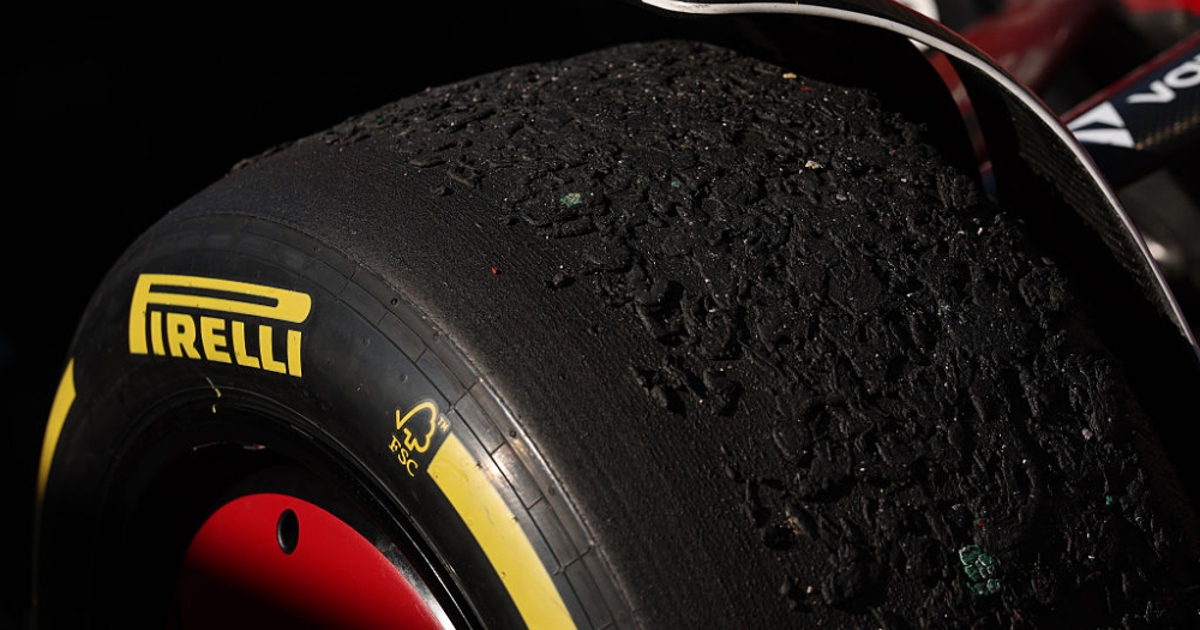
Pirelli has mandated a most of 25 laps per set of tires on the Qatar Grand Prix and a compulsory two-stop race as a consequence of issues about extreme put on.
The penultimate race of the season will happen just below two weeks after this weekend’s Las Vegas Grand Prix. Two years in the past, most stint lengths had been imposed at this occasion as a consequence of small scratches on tires brought on by uncommon curves on the Lusail Worldwide Circuit, however this time the restrictions are as a consequence of tire put on.
Pirelli, which analyzed information from final 12 months’s race, mentioned that some tires, significantly the entrance left, had reached most put on ranges on the high-speed circuit. Tires had been typically used past their Pirelli-specified service life, each for strategic causes and since groups needed to be a one-stop store to guard them from deterioration.
Regardless of Qatar utilizing the three hardest compounds (C1, C2 and C3), Lusail was involved about potential failure as a result of elevated structural fatigue confronted by the tires as a result of excessive lateral power passing by the tires.
Consequently, groups will solely be capable to full a most of 25 laps on a set of tires, which will likely be counted cumulatively for every session and also will embrace security automotive laps and digital security automotive laps. Laps to the grid, formation laps, and laps accomplished after the checkered flag in sprints and grand prix are excluded from the whole.
The utmost variety of laps means groups will likely be compelled to make a minimum of two pit stops through the Grand Prix in Qatar, the place the race distance is about at 57 laps.
The transfer is safety-based and separate from ongoing discussions between the FIA, F1 and the groups over a possible necessary two-stop regulation to enhance racing. The proposals embrace adjusting tire specs, limiting tire life and utilizing three completely different compounds throughout races, however no adjustments had been agreed at a latest F1 committee assembly and exploratory negotiations will proceed into 2026.