F1 drivers are bracing for the “chaos” of coming into the unknown with this weekend’s season-opening Australian Grand Prix and the beginning of a brand new guidelines cycle.
The brand new energy unit for 2026 will characteristic an nearly 50/50 cut up of inside combustion energy and electrical vitality, with a deal with vitality harvesting on the straights.
Drivers should do that via a sequence of strategies, each on qualifying laps and throughout the race, together with superclipping, which has emerged as a brand new F1 buzzword over the winter.
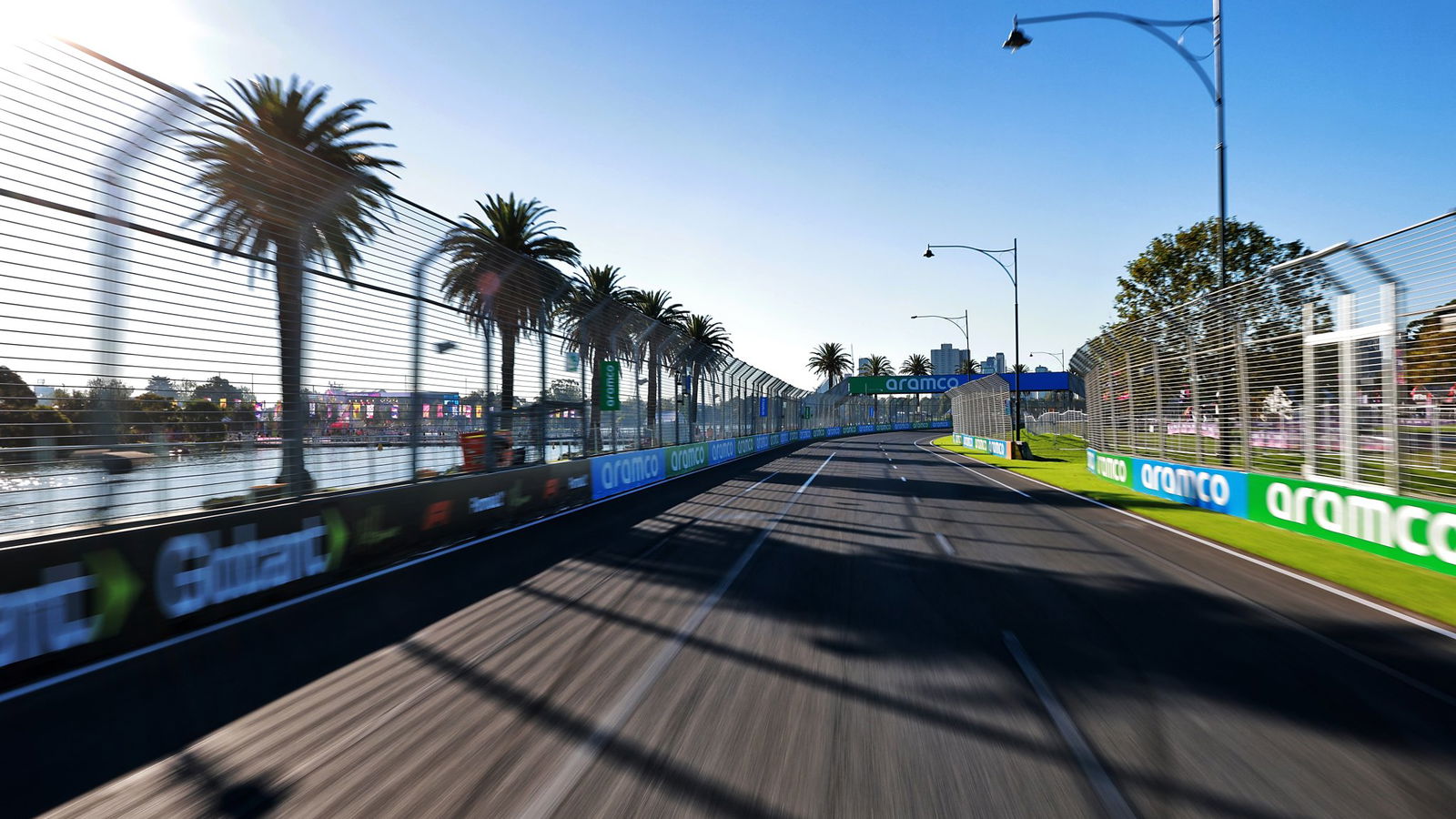
Drivers anticipate this can be a significant problem for Melbourne’s energy-sapping Albert Park, with the potential for “spectacular motion” and “disruption”.
Mercedes driver Andrea Kimi Antonelli stated: “This observe could be very vitality demanding, so in overtaking mode you can provide the automobile in entrance six tenths of a second in a straight line, and as much as eight tenths.”
“There are locations the place placing in a full battery is clearly not environment friendly by way of optimum lap instances, however there are additionally locations the place the opposite automobile is conserving battery by not placing in battery, and once you hit overtake increase you are principally gaining 400 horsepower in comparison with your optimum lap, which supplies you an enormous quantity of lap time and means that you can transfer ahead in corners the place your opponent does not anticipate you to.”
“Once we discuss this, we’re speaking concerning the begin of the race, the protection automobile restart, and even the final lap if it is clearly a state of affairs the place the vehicles are shut collectively. And naturally in the midst of the race when it is secure, after all it’ll be just a little bit harder.
“Right here, there’s an unbelievable quantity of superclip, which slows you down within the straights, however overtaking could be very sturdy as a result of there isn’t any superclip, so the pace both stabilizes or continues to extend. Within the first levels of the race, many spectacular actions can happen, which may result in chaos ultimately.”

Antonelli predicts ‘chaos’ for Melbourne
Drivers may have a variety of recent instruments at their disposal inside the cockpit of their F1 vehicles, together with ‘Overtake’ and ‘Enhance’ modes.
In contrast to Overtake, which successfully changed DRS, Enhance mode can be utilized at any level on the observe to help in attacking or defending positions.
Nonetheless, using these instruments entails vitality trade-offs. This implies drivers must calculate find out how to deploy their modes and achieve this tactically.
“Overtake mode is extremely highly effective and may trigger a little bit of chaos on the primary lap, particularly if everybody jumps into overtake mode,” Antonelli added. “In straight mode, I don’t assume it’s an issue if there’s just a little little bit of twist, it’s really fairly balanced as a result of it’s biaxial, it’s simply much less load.
“The race begin can be an enormous factor once more. It is just a little bit simpler due to the blue panel, nevertheless it’s nonetheless going to be essential to get the timing proper and construct up the increase on the proper second, as a result of in the event you do not you may get a really unhealthy begin. Ferrari appears to be like like they’re in a really sturdy place on that entrance, so it’s going to be essential to maintain making an attempt as a result of we struggled just a little bit in Bahrain.”
“However after that we do not know. We’ll in all probability get a mega begin within the first race in Australia on Sunday. However I believe this race might be just a little little bit of a large number… it might be just a little little bit of a large number.”
“To drive sooner, drive slower.”
Williams’ Carlos Sainz believes the brand new guidelines will profit “adaptive” and “full” drivers, admitting that in some instances will probably be a case of “driving sluggish to go quick”.
Drivers who can outsmart their rivals can reap large income.
“It takes loads of mind area and time to assume. It is way more essential to seek out compromises and balances,” Sainz defined.
“Typically going via a nook sooner does not essentially imply your lap time can be sooner. That is very counterintuitive for racing drivers, as a result of it relies on how a lot vitality you expend and harvest earlier than and throughout the nook.”
“So it is not simple. You must assume twice earlier than going via corners sooner. You even have to know find out how to do it. It’s extremely difficult and really completely different from what we’re used to.”

Sainz says the neatest drivers will profit
Williams teammate Alex Albon added: “When it comes to set-up, the automobile itself is a decrease precedence than the deployment of the automobile and tires being the primary precedence.”
“I believe the tires are difficult as a result of deployment is troublesome, however deployment guidelines all the pieces. From all of the simulation instruments which are operating, as we have seen in Melbourne for instance, the brand new collaboration in FP1 is totally completely different. Every thing you do within the simulator is legitimate as much as a sure level, however after that it is invalid.”
“It is the identical for everybody. It is about having the ability to adapt. As a driver, you must preserve effectivity on the forefront of your thoughts and be very open-minded about your driving model and strategy to the weekend.”
The consensus within the paddock is that Melbourne might be one of many trickiest circuits on this season’s calendar.
Racing Bulls’ Liam Lawson described Albert Park as “probably the most troublesome tracks we’ll ever go to”, however Haas driver Ollie Bearman fears it might be “the worst-case state of affairs for this observe”.
“I believe Melbourne is without doubt one of the most troublesome tracks to go to,” Albon continued. “It may be a little bit of a shock for everybody being the primary race of the 12 months.
“Followers may even see how a lot we scale back administration and battery deployment and tremendous clip.”